
Getting started with cross stitch is one of those decisions that, without you realizing it, can change the way you spend your afternoons. There’s something almost magical about watching a blank piece of fabric gradually fill up, stitch by stitch, with a design that seemed impossible at first. But let’s be honest: when you sit down in front of a kit catalog for the first time, it’s easy to feel a little lost. Aida 14 or 18 count? 35 colors or 4? Should I start with a dog or jump straight into Van Gogh?
If you’re reading this, you’re probably at exactly that point. Don’t worry—that’s what we’re here for. In this guide, we’ll tell you exactly how to choose your first cross stitch kit so your first experience is what it should be: relaxing, rewarding, and something you can feel proud of.
What is a cross stitch kit, and why is it the best way to get started?
A cross stitch kit is basically a complete project in a box. It contains all the materials you need to create a specific piece of embroidery: the fabric, the exact amounts of thread, the needle, the pattern, and the instructions. No rushing to the craft store because you’re missing a color, and no wondering if you bought enough thread.
For a beginner, it’s without a doubt the best way to get started. And we’re not just saying that because we sell kits (well, maybe a little), but because buying materials separately when you don’t yet know how you’ll work requires experience you understandably don’t have yet. A kit takes all that mental load off your shoulders so you can focus on what matters: learning to stitch and enjoying it.
The 5 key factors to consider when choosing your first cross stitch kit
Here comes the important part. These are the factors you should really look at before buying your first kit, in order of importance for someone who’s never embroidered before.
1. Project size: small and finishable
This is by far the most important factor. And the most common mistake beginners make is choosing a kit that’s too large because “the design is gorgeous.” A 40 x 30 cm piece with 60 colors can easily take +250 hours to complete. For an experienced stitcher, that’s wonderful. For a beginner, it’s the perfect recipe for giving up.
Our honest recommendation: your first kit should have a finished size of between 7 and 15 cm, with no more than 15–20 colors. That may sound small, but there’s a good reason for it. Finishing your first project is what will get you hooked on cross stitch. If it takes you six months and you leave it unfinished, you probably won’t come back to it. If you finish it in two or three afternoons, you’ll want to start the next one the very next day.
2. Aida fabric and its stitch count
Aida fabric is the canvas for cross stitch. It’s woven with small, perfectly aligned squares that make your life much easier because each square is a stitch. That said, not all Aida fabric is the same: it’s classified by “count,” meaning how many stitches fit into one inch (2.54 cm).
For a beginner, we recommend starting with 11-count or 14-count Aida. 11-count Aida has large squares (about 4.4 stitches per cm) that are easy to see and ideal for learning. 14-count Aida (about 5.5 stitches per cm) is the cross stitch standard and the type you’ll find in the most kits.
For now, avoid 18-count Aida or linen. They’re beautiful, but they require the kind of eyesight and precision you develop with hours of practice. You’ll get there.
3. Number of colors
The fewer colors your first kit has, the better. Not because you’ll end up with a dull or simplistic piece, but because each new color means stopping, changing thread, and finding your place in the pattern again. A kit with 4–6 colors lets you settle into a much more enjoyable rhythm and focus on getting the hang of the technique.
Children’s and beginner kits usually have between 4 and 10 colors. That’s the perfect range to start with. Once you’ve mastered the basic technique, you can move on to projects with 20, 30, or more colors without a problem.
4. A theme that excites you
It sounds obvious, but it isn’t. Many beginners choose the “easiest” kit even if the design doesn’t speak to them, then struggle to find the motivation to sit down and stitch. The truth is, you’ll spend a lot of hours looking at that design, so choose something you’ll be excited to see finished. It could be an animal you love, a landscape that reminds you of something, a Christmas motif, or your team’s logo. If the theme excites you, the hours will fly by.
5. A trusted brand
In the world of cross stitch, some leading brands have been making quality kits for decades: DMC, Vervaco, Permin, Dimensions, Anchor, Riolis. They’re the brands we all use and the ones you’ll find in any reputable shop. Avoid unbranded kits or those from questionable sources, especially when you’re starting out. You’ll immediately notice the difference between quality Aida fabric and a cheap alternative, and thread that runs in the first wash can ruin months of work. Quality matters.
Common mistakes that put beginners off (and how to avoid them)
Before we get to our specific recommendations, let’s take a moment to talk about the most common pitfalls that make so many people consider throwing in the towel during their first attempts. Knowing what they are can save you a lot of frustration.
Starting with a project that’s too ambitious. We’ve already said it, but it bears repeating. A masterpiece like a reproduction of a Klimt is not your first kit. Your first kit should be something you can finish over a long weekend.
Not using a hoop. A hoop is the ring that keeps the fabric taut while you stitch. Many beginners try stitching without one and end up with a wrinkled piece and uneven stitches. Some beginner kits already include one. If yours doesn’t, buy an inexpensive one separately. It will make all the difference.
Not separating the strands of thread. Embroidery floss, the type most commonly used in cross stitch, comes as six twisted strands. Most patterns use just two or three strands at a time. If you stitch with all six, the result will look bulky and you’ll use up the thread in no time. Always separate the strands before you begin.
Starting in the center (or not). In cross stitch, you should always start at the center of the fabric and the pattern to make sure your embroidery is properly centered. The pattern will show you the center with arrows. This simple trick prevents you from discovering, after 20 hours of work, that you’ve run out of space on one side.
Skipping the final wash. When you finish your first piece of embroidery, don’t skip this step. A gentle wash in lukewarm water and ironing it face down on a towel will help the fabric regain its evenness and keep the colors vibrant. It’s the finishing touch.
Our picks: 4 ideal kits for your first cross stitch project
Now that we’ve covered all of that, it’s time to take action. We’ve selected four actual kits from our catalog, each designed for a different kind of beginner. They all meet the criteria we’ve just discussed: small size, few colors, beginner-friendly Aida count, and trusted brands.
Sloth Kit (Dimensions): the perfect first step
If you’ve never held an embroidery needle in your life, this is the kit for you. The Dimensions sloth is small (7.6 cm), has just 4 colors, and comes with 11-count Aida fabric (the largest and most beginner-friendly) and its own plastic hoop, so you can frame the finished piece straight away.
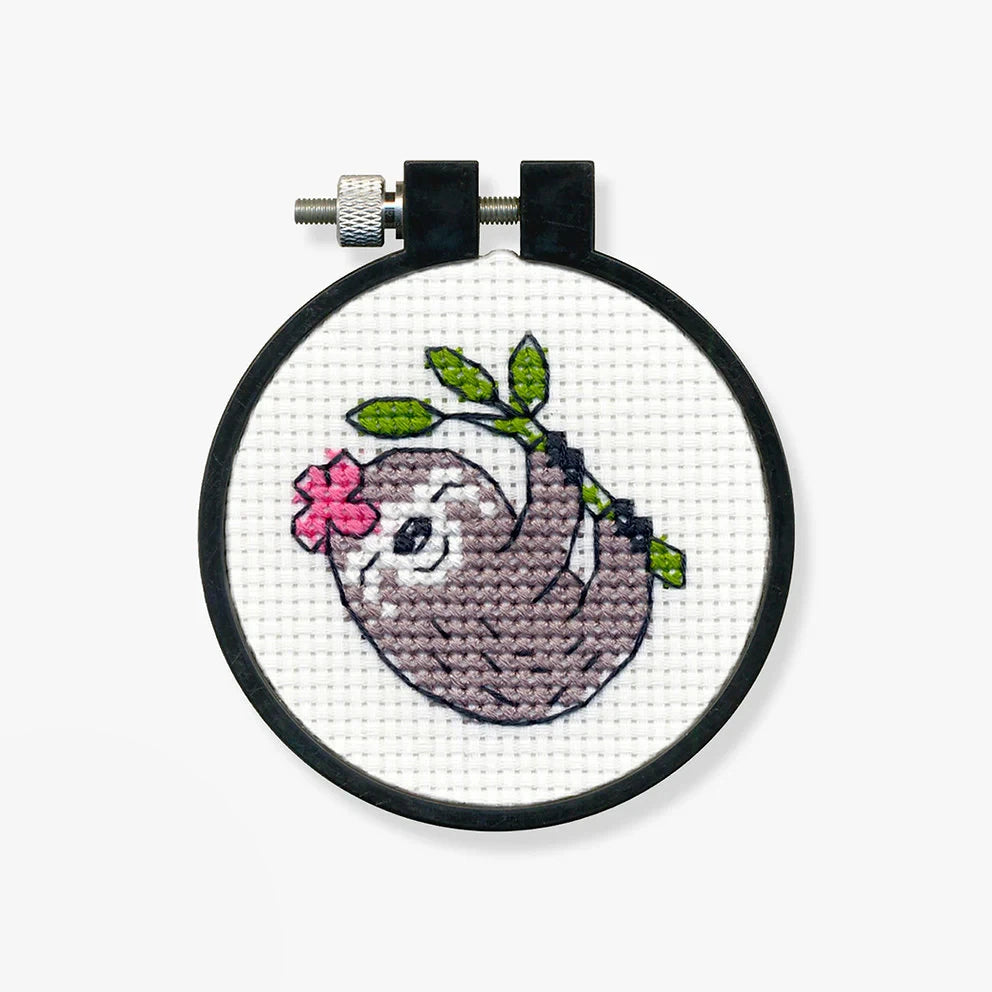
It’s the kind of kit you can finish in one long afternoon or a couple of sessions. And the satisfaction of seeing that finished sloth hanging up is priceless. At €7.84, it’s also the smallest possible investment to get started. 👉 View the Sloth Kit
Pineapple Kit for Kids (Vervaco): the most complete “all-inclusive” kit
If you’d prefer a slightly more substantial project while still staying within beginner territory, the Vervaco Pineapple Kit is a gem. Despite being called “for kids,” it’s perfectly suitable for adult beginners: it measures 10 x 10 cm, uses 4 colors, and is officially rated Easy by Vervaco.
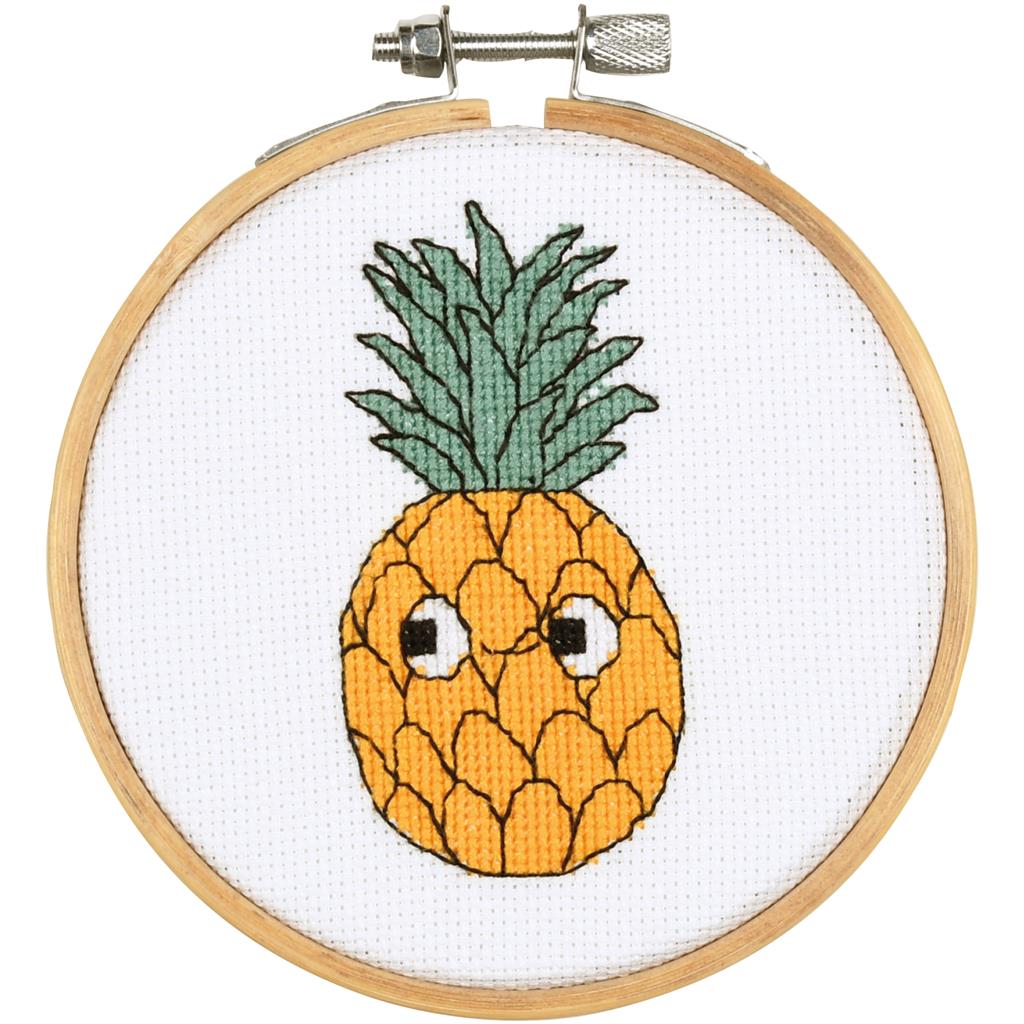
What we love about this kit is that it comes with everything you need: DMC Mouliné embroidery floss (the world’s leading thread brand), an included bamboo hoop, a thread organizer to keep everything from getting tangled, a large, clear gridded pattern, and even instructions in 8 languages. You can literally open the box and start stitching without buying anything else. 👉 View the Pineapple Kit
White Sheep Keychain Kit (Permin): useful, small, and practical
If you’d like your first project to serve a real purpose when it’s finished, this Permin kit for making a keychain is ideal. It’s tiny, quick to stitch, and the result is a lovely, personal keychain you can carry with you or give as a gift.
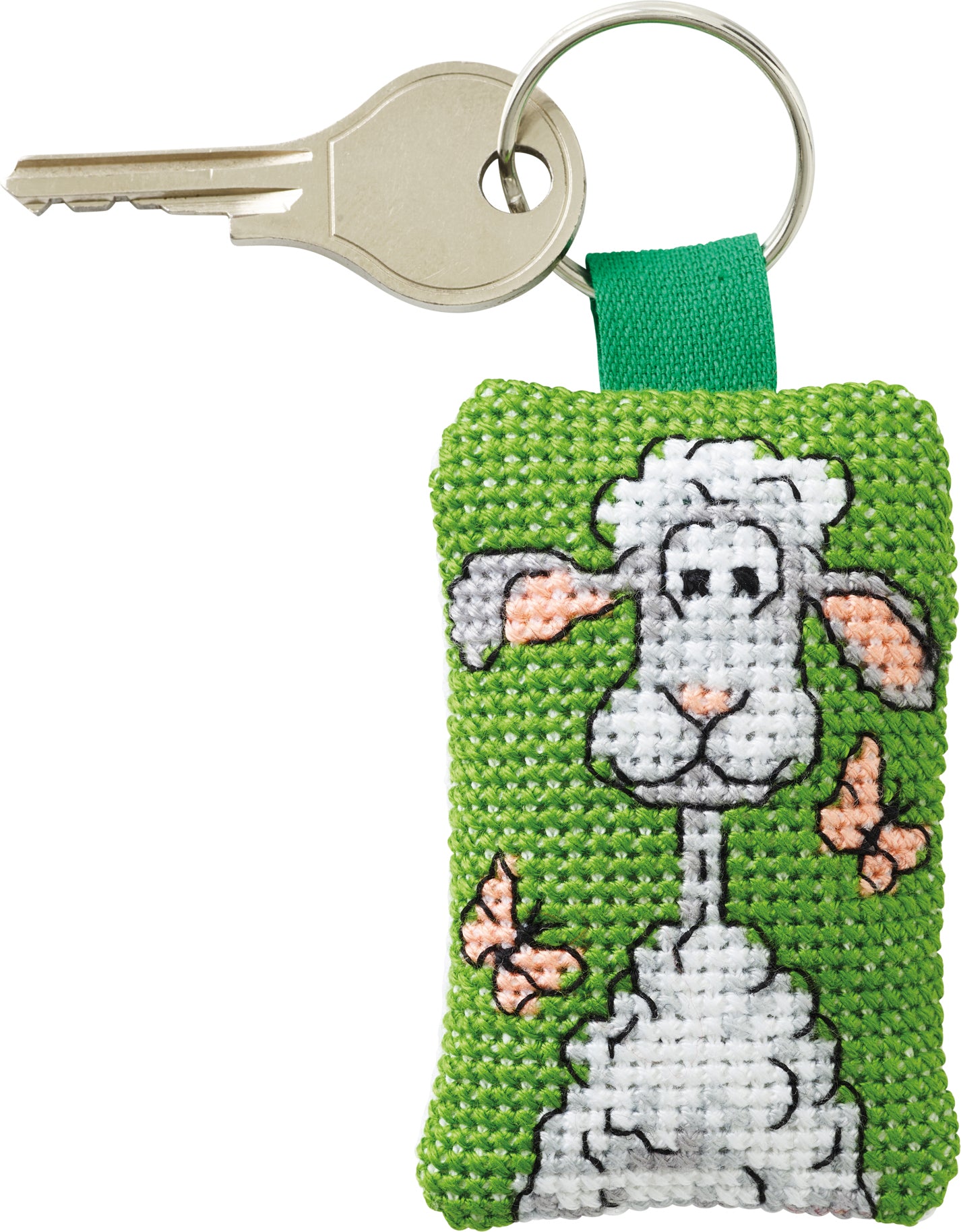
Permin is a Danish brand with nearly 170 years of history, so quality is assured. At under €9, it’s one of the most affordable ways to try cross stitch—and you’ll end up with something you can use, too. We also have versions with a dog, cow, and gray sheep if you’d prefer another design. 👉 View the White Sheep Keychain Kit
Starry Night Bookmark Kit (DMC): for those ready to take on a more distinctive challenge
This fourth kit is a little more ambitious, but still perfectly manageable as a first project for someone with patience and good eyesight. DMC’s Starry Night bookmark, featuring Van Gogh’s design, gives you a result that looks much more complex than it really is, and the finished piece—a stitched bookmark—is both useful and beautiful.
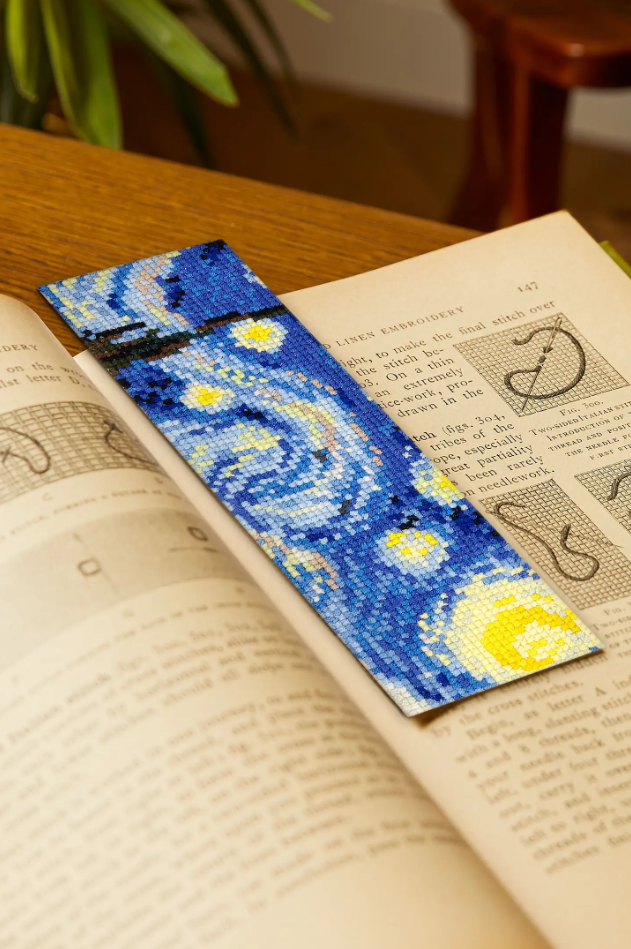
DMC is the leading brand in cross stitch, so the quality of the thread and fabric is guaranteed. If you’re the kind of person who wants an impressive result whenever you start something, this is the kit for you. Just make sure you have good lighting and a little more patience than with the three previous kits. 👉 View the Van Gogh Bookmark Kit
Frequently asked questions about choosing your first cross stitch kit
How long does it take to finish your first cross stitch kit?
It depends a lot on the size and how much time you spend on it, but a beginner kit like the ones we’ve recommended (between 7 and 10 cm, with 4 colors) can be finished in 4 to 10 hours of stitching. That’s 2–3 relaxed afternoons or a couple of laid-back weekends.
What is the recommended minimum age for starting cross stitch?
Children aged 7–8 and up can start with kits designed for them, always with adult supervision when using the needle. There’s no age limit for adults. In fact, many people discover cross stitch later in life and make it their main hobby.
Do I need to buy a hoop separately?
Some kits include one (like the Dimensions Sloth or the Vervaco Pineapple), and others don’t. For your first project, we strongly recommend using a hoop. If your kit doesn’t include one, a basic 15–20 cm wooden hoop costs very little and will last you your entire stitching life.
What if I make a mistake while stitching?
It’s absolutely fine. Cross stitches are very easy to unpick using the needle itself or a small pair of embroidery scissors. That’s one of the great things about this technique: mistakes are almost always reversible. The worst thing you can do is give up—not make a mistake.
Is printed fabric or plain fabric better?
Kits with printed fabric (where the pattern is already printed on the fabric) may seem easier, but the finished piece can look less clean if you don’t cover the markings perfectly. Kits with plain fabric and a separate pattern (like the ones we’ve recommended) are the standard in cross stitch and will teach you how to stitch “properly.” Don’t be intimidated by this format: it’s easier than it looks.
Is there enough thread in the kit, or do I need to buy more?
Kits from reputable brands like DMC, Vervaco, and Permin always include exactly the amount of thread needed to complete the project, with a little extra. You won’t need to buy anything else. Still, if you ever run out of a color, all the kits we sell use official DMC or Anchor color numbers, so you can always buy a skein of that specific color separately.
Now that you know how to choose, take the first step
Choosing your first cross stitch kit doesn’t have to be overwhelming. Remember the basics: small size, few colors, 11- or 14-count Aida, a trusted brand, and a theme that excites you. With that, you’re almost all set.
And if you’ve made it this far, you’re probably more ready to get started than you think. That first kit will be the beginning of something much bigger: a hobby that will keep you company during afternoons on the sofa, while traveling, and on those days when you just need to switch off from the world. Cross stitch isn’t just a hobby; it’s a way to give your hands something lovely to do while your mind rests.
You can explore our full selection of cross stitch kits, with more than 700 exclusive designs from the best brands in the world, or take a look specifically at our collection of small cross stitch projects if you’d rather start with something quick. And if you’re already sure this is the hobby for you, don’t miss our companion guide to the essential materials for cross stitch, and discover the surprising therapeutic benefits of cross stitch for mental well-being.
What are you waiting for? Your first stitch is waiting.